September 24, 2026
The future of smart locks and what you should check before buying
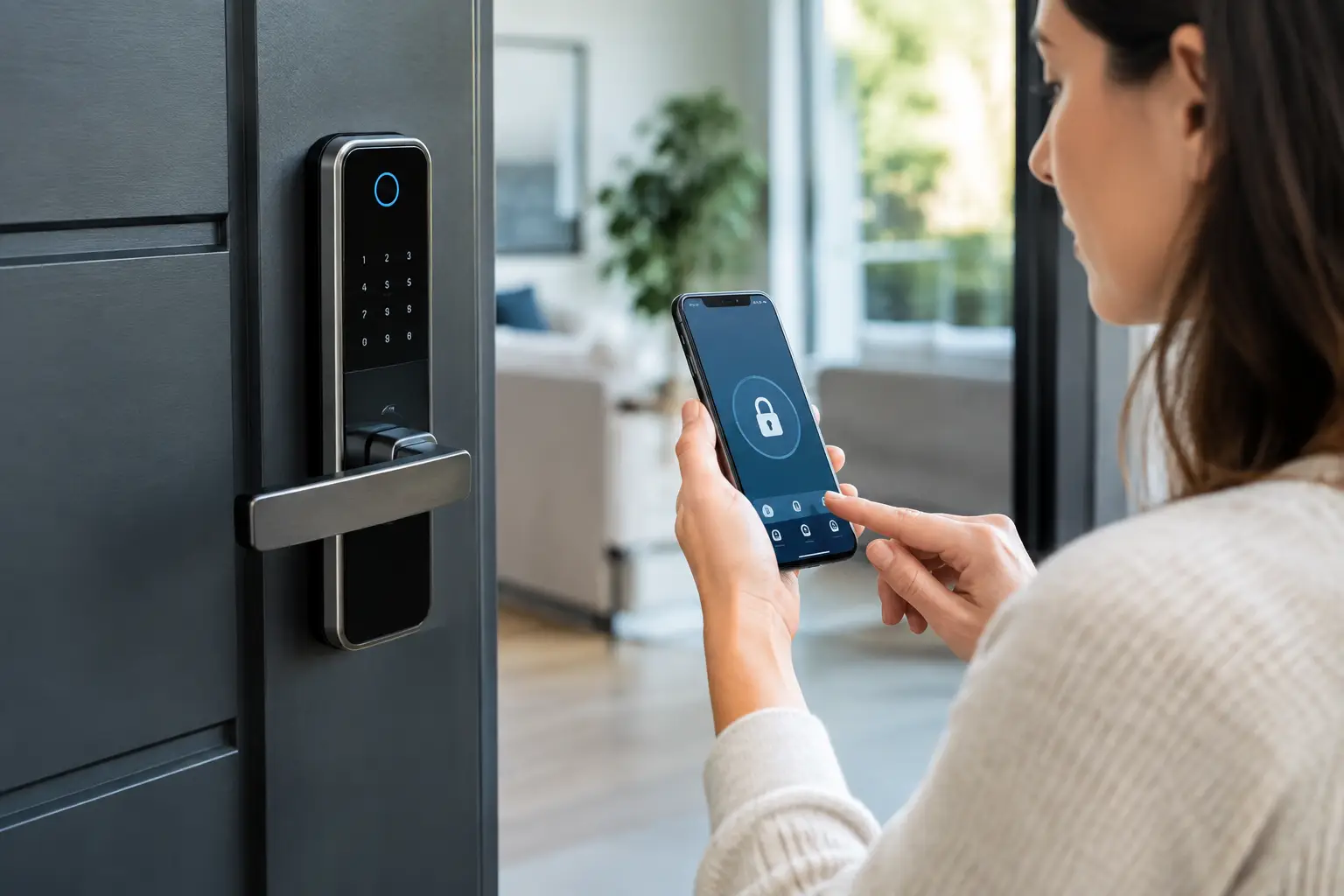
The future of smart locks is here: code, fingerprint and app access. This is how you choose a useful, safe and affordable lock for your home door without paying for unnecessary functions, literally every day.
A key forgotten by a family member, a child who returns from school before the parents, a guest who arrives while you are at work or an apartment that is rented short-term - these are exactly the situations in which The future of smart locks Turns from an intriguing upgrade to a useful solution. Instead of hiding a key under a flower pot or changing a cylinder after every change, you can manage access to the door using a code, fingerprint, proximity tag or app.
But not every smart lock is suitable for every door, and not every feature that appears on a product page is really necessary. The accessible prices in the market allow you to find interesting models even on a low budget, but a good purchase starts with matching the door, with the habits of the home and with a sober examination of the reviews and technical details.
Why smart locks go from a gimmick to a household product
The big advantage of a smart lock is not just opening the door from the phone. The real value is permission control. It is possible to set a permanent code for the members of the household, a temporary code for a cleaner or a professional, and sometimes also a code with defined operating hours. When access is no longer needed, the code is canceled instead of collecting keys or worrying about copies.
The routine also becomes simpler. Children don't have to walk around with a key, spouses don't have to coordinate who took it, and in many cases you can see in the activity log when the door was opened. In some models, an alert is received when the lock remains open or when someone tries to enter an incorrect code several times.
And yet, this is not a magic product. A smart lock depends on the battery, correct installation and the quality of its mechanical mechanism. A convenient app doesn't make up for a weak cylinder, and remote access won't help if the door doesn't close well. That's why you should think about the lock as a whole: hardware, physical fit, way of access and backup in the event of a malfunction.
The future of smart locks: less key, more choice
In the coming years, an increase in models that combine several ways of opening in the same product is expected. This is important because every house has different habits. A fingerprint is convenient for those who enter and exit quickly, a code suitable for guests and children, and a proximity tag can be a simple solution for people who do not want to use the phone.
The prominent direction is also less dependence on a permanent connection to the network. Many locks can work locally using a code, fingerprint or short-range communication, and only operations such as remote opening and alerts require a link unit or connection to the home network. For buyers who prefer simplicity and privacy, this is a positive point: one should not choose a more connected product than is really necessary.
Further improvement is expected in the management of permissions. Instead of one code for everyone, families will be able to use separate permissions, with clearer documentation and the option to revoke access with a click. This is especially useful for rented apartments, small offices, housing units and houses where service providers come regularly.
Biometrics are convenient, but not always necessary
Fingerprint unlocking is one of the most requested features, and rightfully so. It saves searching for a key or phone. However, it is not the perfect choice in every situation. A wet, dirty or injured finger may be absorbed less well, so it is mandatory to have at least two additional opening alternatives.
In an affordable model, a reasonable identification mechanism alongside a reliable code, an emergency key and an easy-to-replace battery is better than a fancy sensor without proper backup. Those who live alone may be satisfied with a code and a mechanical key. A family with children or many logins during the day will probably derive more value from a combination of fingerprint and personal codes.
Before you order: the adjustment to the door precedes any discount
A beautiful product image and a sale price do not guarantee that the lock will be installed at your place. Doors in Israel come in different structures, and sometimes the difference between a European cylinder, an internal bolt and a multi-bolt lock determines whether the product is useful or remains in the box.
Check the thickness of the door, the position of the cylinder, the direction of opening the door and the distance between the handle and the mechanism. Also check if the existing handle should remain, and if it is an entrance door, an interior door or a gate. A lock designed for an interior wooden door is not necessarily suitable for a heavy metal door at the entrance to the house.
Before purchasing, go through the following four details:
- Installation type: Does the lock replace a cylinder, connect to the existing mechanism from the inside or does it require a complete handle replacement.
- Backup options: Look for an emergency key, a temporary external power connection, or a clear way to open in case the battery runs out.
- Power supply: Check battery type, estimated usage time and low battery alert. Common and simple-to-replace batteries are generally preferred.
- Dimensions and compatibility: Rely on the dimension drawing on the product page, not just the title. If the dimensions are not clear, this is a sign to stop before ordering.
The installation itself is also part of the cost. There are products that are suitable for basic self-assembly, but for a complex or expensive entrance door it is better to use an experienced installer. Small savings in installation can be costly if the door does not lock smoothly or if the entry mechanism is damaged.
How to read a product page without falling for a big promise
In the market for discounted products, you can find great deals, but it's important to separate useful data from marketing. A high rating is only a good sign when it is based on a significant volume of orders and detailed reviews. Look for buyer photos, comments on door thickness, build quality, fingerprint recognition speed and battery life.
Pay special attention to negative reviews. If several buyers complain about the same problem, such as an unstable app, unclear instructions, or incompatibility with a common cylinder, it is not worth ignoring just because of a high discount. On the other hand, a single complaint about incorrect delivery or installation is not necessarily a reason to reject a successful product.
Don't pay extra just because of a long list of functions. Touch screen, temporary codes, auto lock and battery alert are features that have obvious value. A built-in camera, voice control or remote opening may be useful, but they also add complexity and sometimes require additional equipment. The right question is not what the lock knows how to do, but what you will use at least once a week.
Security and privacy: the basis for a smart purchase
A smart lock should be safe even when the phone is at home, the network is not available or the battery is low. Prefer a model that allows locking and unlocking locally without dependence on a cloud connection. After installation, replace the initial administrator code, choose a code that is not related to a date of birth, and delete permissions that are no longer needed.
If using the app, set a strong password for the phone and user account. Do not share the main admin account with all household members if separate users can be created. Software updates can fix bugs and improve security, but first check that the model comes from a manufacturer that maintains the product and not just sells it.
It is important to remember that a smart lock is not a substitute for a strong door, a proper frame and basic security habits. At the front door, also check the quality of the bolt and the adjustment of the lock to the structure of the door. If in doubt, a local professional can save a significant fitting error.
When the low price is actually the best choice
Not every home needs the most expensive model. For a rental apartment, a study, a warehouse or an interior door, a basic lock with a code, a proximity tag and a backup key may do all you need. In such cases, it is better to choose a simple product with good reviews than a complex system that will require unnecessary maintenance.
At the entrance door to a house where there are children, guests or service providers, it makes sense to invest more in reliability, a quality mechanism and privilege management. Those who want to unlock remotely should make sure in advance that the model actually supports this and that there is no need for an additional component that is not included in the displayed price.
When comparing deals, look at the final price and not just the discount percentage: product cost, required accessories, batteries, installation option and shipping cost. Rating, number of orders and real photos of buyers sometimes give a more useful picture than a discount that seems dramatic.
The best choice is not necessarily the lock with the most screens and functions. It is the lock that fits your door, opens the house in a way that is convenient for you, and always leaves a simple and safe way to enter even on the day when the phone runs out of battery.