
September 28, 2026
How to find quick cleaning products at a price worth paying
How to find quick cleaning products without getting lost among thousands of offers? A practical guide for smart filtering by use, price, ratings, orders and discounts for a cleaner home with every smart purchase.
A good microfiber cloth, a narrow brush for the sink or a small squeegee for the window can save minutes on each cleaning. The question is not only what to buy, but How to find quick cleaning products that will really serve you, instead of filling a drawer with cheap gadgets that don't come out of the package. With thousands of products, similar images and varying prices, proper filtering is what makes random scrolling a useful find.
The goal is not to find the cheapest product, but the item that shortens a repetitive action at home: wiping a surface, removing hair, cleaning crevices, collecting dust or quickly treating a stain. The right product should fit the surface, be simple to store and cost a reasonable price in relation to the frequency of its use.
Start with the action that wastes your time
Searching for the word "cleaning" alone usually returns results that are too broad. It is better to start with the exact problem: animal hair on the sofa, scale around the faucet, crumbs in the car, dust between the shutter steps or stains on glass. The more specific the search describes an action or area, the easier it is to identify a relevant product.
For example, someone who cleans a small kitchen does not necessarily need a large set of brushes. A stove scraper, a quality double-sided sponge and absorbent cloths may be more than enough. In a home with pets, a multipurpose roller or rubber brush can be more useful than a regular vacuum cleaner. A quick cleaning product should save mess, not add a step of assembly, loading or maintenance.
Also think about the frequency of use. An item that is next to the sink and is pulled out every day is often worth more than a large appliance that is intended for thorough cleaning once a month. This is the difference between a deal that looks good and a product that creates real value in the home.
How to locate products for quick cleaning with the help of correct filtering
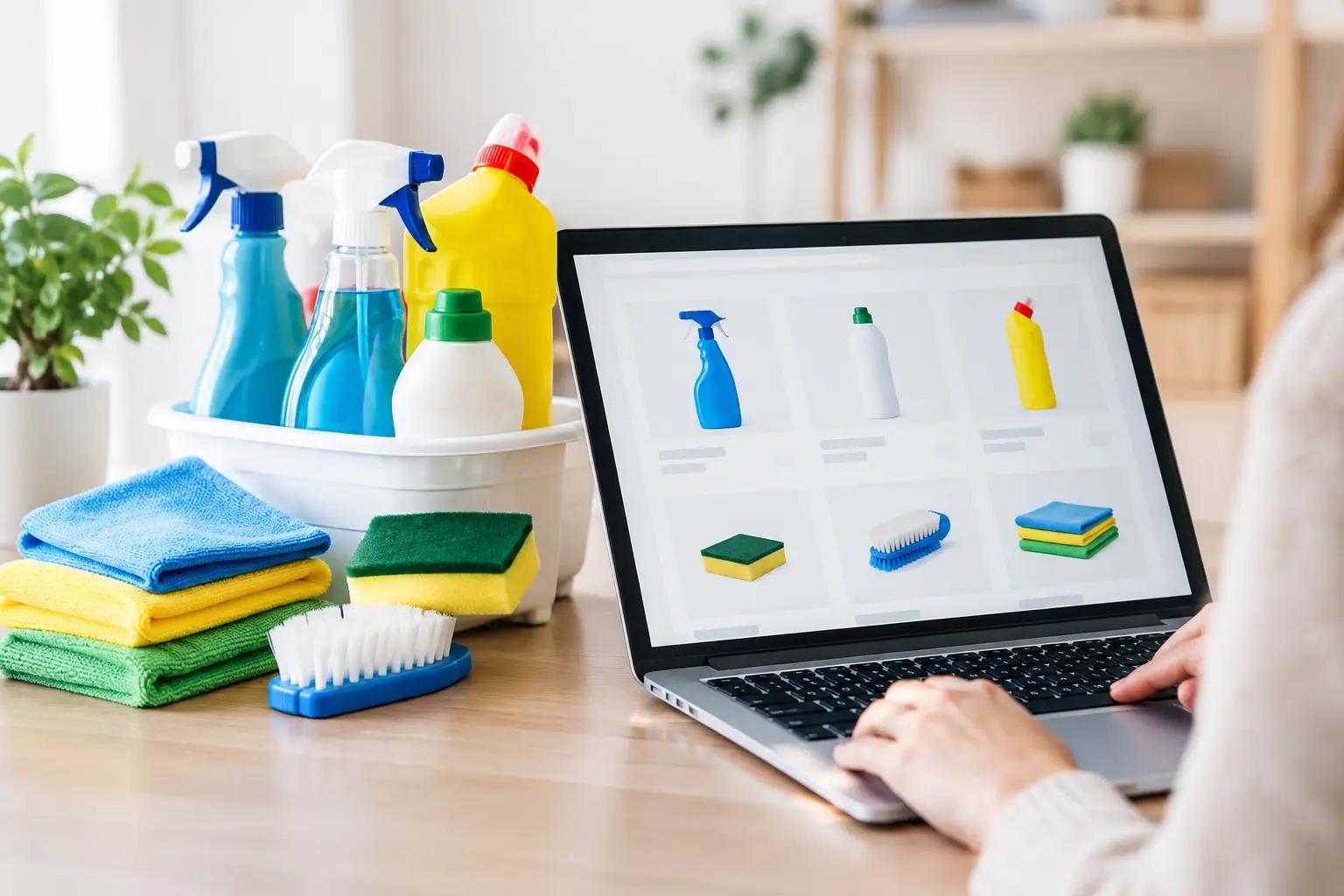
After you have defined the task, you can narrow down the options according to a few simple signs. Clear categories, price filters, discount percentages, ratings and order quantity make it possible to make a decision without reading dozens of long descriptions. In an organized platform like Smart Home Finds Deals, this data is displayed so that it is easy to compare products of the same family and to choose quickly.
The following order works well when looking for a small and useful product:
- Define only one usage. Look for a solution for crevices, windows, sofa or car, and not "house cleaning product" in general.
- Set a ceiling price in advance. In small products, a low price is an advantage only if the product is expected to be used by you repeatedly.
- Filter by rating and quantity of orders. A high rating with a significant number of orders gives a better indication than a marketing image alone.
- Check dimensions and material. A brush that is too small will not fit a large surface, and silicone, microfiber, hard plastic or metal are suitable for different tasks.
- Compare only two or three options. More than that usually does not improve the choice, but only hinders it.
There is no magic number that fits every product, but you should look for a combination of a consistent score, reviews with photos, and actual orders. A product with few reviews can be excellent, especially if it is new, but in that case you should be more conservative in price and not order a large quantity.
Ratings and orders are a sign, not a promise
A rating of 4.8 looks great, but is less meaningful if it is based on a very small number of buyers. On the other hand, a product with a slightly lower score and many orders may be a safer choice, especially for basic items such as cloths, brushes or mops.
When reading reviews, look for comments on durability, actual size and material quality. These are the details that affect daily use. If some buyers note that the handle breaks, the fabric is too thin or the product is smaller than the pictures, take it seriously even if the overall score is high.
Adjust the material to the surface, not to the image
A quick cleaning product should clean without causing damage. This is an especially important point in the kitchen, bathroom and car, where there is glass, stainless steel, shiny coatings, screens and delicate fabrics. The same tool that looks effective in the picture may scratch a surface or leave marks if the material is not suitable.
Microfiber is generally suitable for dust, glass and delicate surfaces, provided it is clean and has not absorbed coarse dirt. Silicone is convenient for removing hair, for easy cleaning of dishes and collecting crumbs, and it is easy to wash. Brushes with stiff fibers are good for crevices, fumes and stubborn dirt, but less suitable for coated surfaces. Rubber wipers are effective for glass, shower and windows, but you should check that the blade is straight and flexible enough.
If you are looking for a product to use in the car, prefer compact tools that can be stored in the glove compartment or trunk. For a kitchen, it is better to choose items that are washed quickly and do not store odors. In a home with children or animals, look for products without small parts that break easily and without sharp edges.
When a multipurpose product really pays off
A multipurpose product sounds like a good deal, but it's not always the smart choice. A brush that promises to clean bottles, blinds, showers and keyboards may be mediocre at any of the tasks. In contrast, a simple tool with two sides or an interchangeable handle can save space and be very useful.
You should choose a multipurpose product when it solves actions that are close to each other. For example, a quality microfiber cloth that is suitable for the kitchen, bathroom and furniture is an effective purchase. A narrow brush with a replaceable head can fit into crevices, window rails and corners in the sink. On the other hand, a large device with many heads is a less good investment if you will actually only use one head.
The low price may tempt you to order a large set, but sets sometimes include duplicates and less useful parts. If you already have a mop, cloths and sponges, look for the missing tool that shortens the most annoying operation, and not another version of what is already in the closet.
Check the real cost before ordering
A high discount attracts the eye, but the discount percentage is not the only figure that is important. Check the final price, shipping options, arrival time and package size. A very cheap product that arrives late or requires a quick replacement does not necessarily save money.
In consumable products such as sponges, cloths or replacement heads, it is useful to calculate a cost per unit. A pack of 20 cloths can be profitable, but only if they are the size and quality that suit you. In more durable products, such as a brush with a handle or a mop, it is sometimes better to pay a little more for quality material, a stable connection and a comfortable grip.
Also pay attention to the pictures. A picture that shows some accessories does not always mean that all accessories are included in the price shown. Read the selection options and package description before adding to cart. It takes half a minute and can prevent a wrong order.
Build a small basket of products that really work
Most houses do not need dozens of solutions. A basic and useful basket can include microfiber cloths, a narrow brush for crevices, a tool for removing hair from fabrics and a small wiper for glass or for the shower. From there, you can add an item only when a clear need arises, such as cleaning tracks, treating limescale or collecting crumbs in the car.
This approach also makes it easier to keep track of what's really worth ordering again. After a few weeks, you will know if the mop has reached daily use, if the brush is comfortable in the hand and if the cloths remained effective after washing. A smart purchase in the field of cleaning is built from experience at home, not only from a good image and a low price.
The next time a dirty surface, a narrow crevice, or hair on the couch is taking up your time, don't look for a "magic solution." Define the task, check the data, and choose one small tool that will make the operation easier from the very next cleaning.