
September 20, 2026
10 cheap gadgets to improve home safety worth checking out
Looking for cheap gadgets to improve home safety? This way you will choose useful solutions for doors, smoke, water and electricity, check quality and avoid unnecessary purchases without compromising on usability.
An unlocked door, a slow leak under the sink, or a dark hallway at night can quickly become an inconvenience, costly damage, or unnecessary risk. Cheap gadgets to improve home safety They don't replace a quality lock, standard detector, or professional, but they can add a useful layer of warning at a low price and solve blind spots that are easy to miss.
The smart way to buy is not to fill the house with appliances. Start from an area with a real risk: entrance, windows, water, electricity or traffic at night. Then they check if the product is easy to install, which batteries it requires, What do the ratings say? And some orders have already been placed. A cheap product that works consistently is better than a product loaded with functions that you won't install or test.
10 cheap gadgets to improve home safety
1. Door or window opening sensor
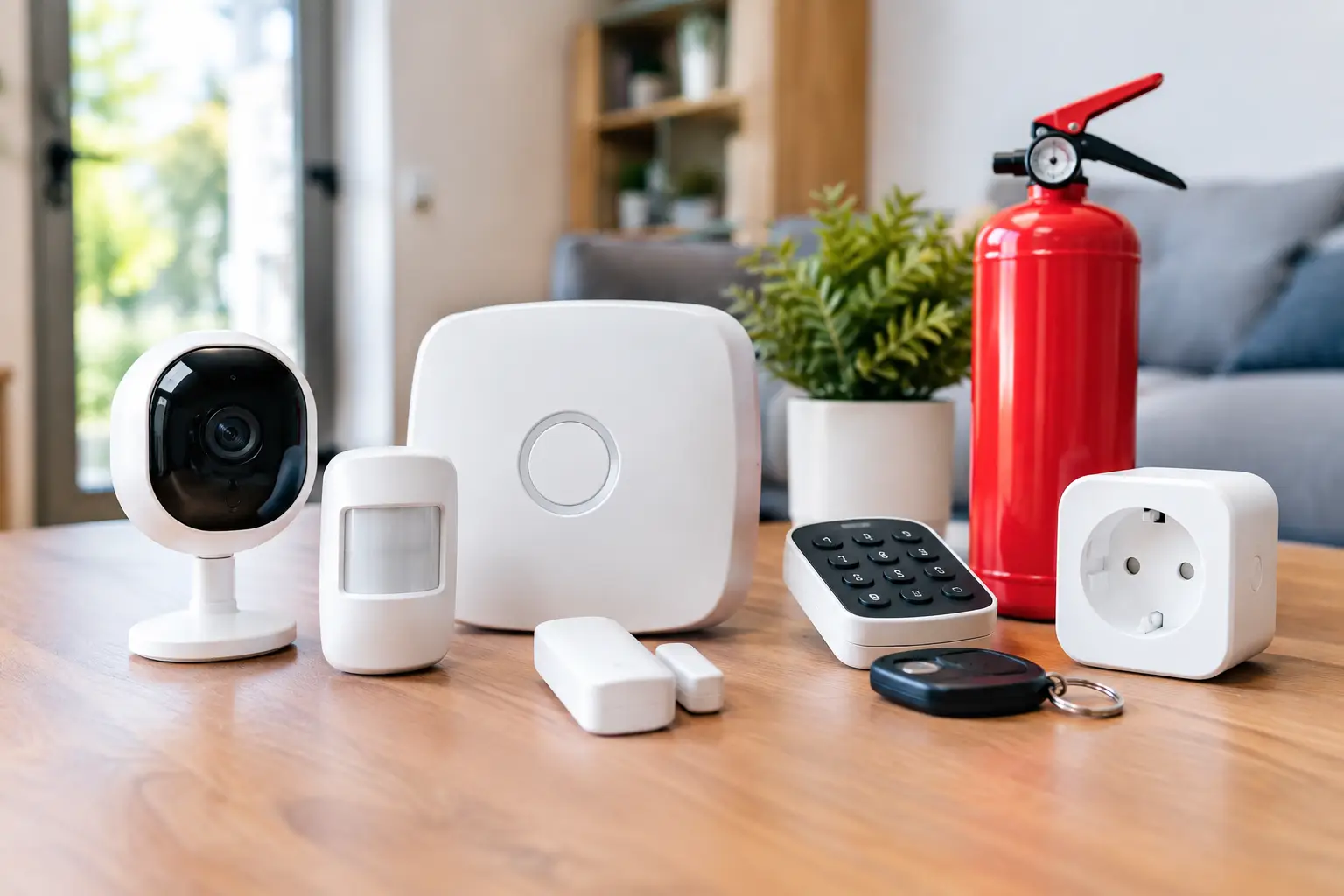
This is one of the small products with the most immediate value. Two magnetic parts stick to the door or frame, and when they move away from each other, you get a beep or an alert in the app, depending on the model. It is suitable for an entrance door, a low window, a balcony door or a closet that you prefer to leave closed to children.
In independent models, the installation is simpler and there is no need forWireless network, but usually you will only get a local sound. A connected model provides a notification to the phone, but depends on the connection, the application and the battery. Before buying, check the allowed operating distance and the type of glue, especially if the frame is rough or exposed to the sun.
2. Compact water leak detector
Small leaks near a washing machine, dishwasher, heater or under the sink can remain invisible for days. A water detector simply sits on the floor, and when water touches the contacts it sounds an alarm. It's not a particularly impressive product, but it might save a bloated closet, a damaged floor, and a lot of cleaning.
Look for poplars loud enough to hear from an adjacent room, and choose a spot where water is likely to accumulate first. If the house is large or if you are away from home a lot, a phone alert can be worth the extra. It is important to remember: the sensor detects water that has already reached it, it does not prevent the leakage itself.
3. Night lighting with motion sensor
Trips happen on the familiar route: on the way to the bathroom, on the stairs, in the hallway or next to a child's bed. A rechargeable or battery-operated night lamp with a motion sensor gives low light exactly when you need it, without turning on strong lighting and without looking for a switch in the dark.
You should choose a warm and gentle light, so that it doesn't dazzle at night, and check if you can adjust the turn-off time. In cheap models the sensor is sometimes too sensitive or not sensitive enough. Therefore it is better to start with one unit in a problematic place and see how it functions for a week.
4. Door stop against slamming
Wind, children, pets and a heavy door are an unpleasant combination for fingers. A rubber floor stop, door holder or hinge guard can reduce sudden slams and protect both the wall and hands. This is an especially small solution for rented apartments, because many of the models do not require drilling.
There is no one stop that fits every door. Check if the floor is smooth, how far the door is from the floor and if the door is heavy. A cheap stopper that doesn't grip well on smooth tiles may just move at the wrong moment.
5. Safety lock for cabinets and drawers
Cleaning agents, medicines, knives and tools should be out of reach of children. Adhesive locks for cabinets and drawers make it possible to limit opening without replacing handles or drilling. They are also useful for a cabinet under the sink, where sometimes products are kept that should not be left accessible.
Note that this is a delay layer, not impenetrable protection. An older child or adult can understand the opening mechanism, and weak glue may come loose. Clean and dry the surface before installation, and check the lock after a few days and not just at the moment of gluing.
6. Socket protector for children
In homes with toddlers, outlet covers are a basic and inexpensive item. They reduce the chance of inserting an object into an unprotected outlet, especially in low areas and in playrooms. There are also protection boxes for splitters, which can arrange cables and prevent direct access to connections.
Do not choose thin lids that are easily removed. Also, don't load a splitter just because it's hidden inside a box. An electrical load, a damaged cable or a loose connection is not a problem that a small gadget solves. If an outlet heats up, smells burnt or flickers, stop using it and contact a qualified electrician.
7. Independent smoke detector
A smoke detector is not a decorative accessory, but a critical safety product. You can find very accessible models, but the price is not the only filter. Look for a relevant standard marking, clear instructions, an available replaceable battery and an alarm strength specified in the specification. In a house with several bedrooms, the location is just as important as the product.
Do not rely on a cheap detector without documentation, reliable reviews or compliance with local standards. It is also not a substitute for a carbon monoxide detector where there are combustion devices, depending on the need and safety requirements. Check the button according to the manufacturer's instructions and replace the battery in time, not only when the beeping starts to bother you.
8. Simple indoor security camera
A small camera can help check who entered the house, track a pet, or get a quick picture when there is an alert from a sensor. For a small apartment, sometimes one camera aimed at the entrance or a central area is more than a complex and expensive system.
Here it is important not to buy just by the price. Check if there is local storage on a memory card, if there is a hidden monthly cost, what is the quality of photography in low light and how to secure the account. Change initial password, enable additional authentication if available, and don't aim camera at private areas. Physical security that doesn't respect privacy is a bad deal.
9. Thermometer and humidity sensor for the room
Heat and humidity do not have a dramatic alarm, but they can indicate conditions that require attention. Long-term high humidity near a window, bathtub or closet can encourage mold. Extreme temperature in a baby's room or an adult's room is useful information, especially in transitional seasons.
A basic sensor with a clear enough display for most homes. There is no need to get involved with graphs and apps if the goal is to identify an abnormal situation and open a window, turn on ventilation or check a source of moisture. If there is a stain, odor or peeling paint, measuring does not replace treating the problem.
10. Rechargeable emergency flashlight or power failure lighting
A power outage is the worst time to look for a flashlight in a drawer. A rechargeable flashlight that stays in the socket and turns on automatically when there is no power, or a small emergency lamp near the exit, provide a safer way to move around the house. It is especially suitable for the hallway, near the electrical cabinet and near the front door.
Check how long the flashlight actually works and not just how long it charges. A model with a test switch, wide illumination and a comfortable grip will be more useful than a tiny flashlight with too much light and a fragile structure. Once every few months you should unplug it and make sure the battery is still holding.
How to choose without turning a cheap deal into an unnecessary purchase
The price shown is only part of the deal. In gadgets for the home, first look for suitability to the problem, then useful quality. A high rating with a significant number of orders gives a better indication than a perfect rating with few reviews. You should also read one-star and three-star reviews: limitations such as weak glue, unclear instructions or a battery that runs out quickly are usually revealed there.
Check dimensions, battery type and the language of the instructions. A sensor that doesn't fit the window frame, a camera that requires a subscription that you didn't want, or a detector that can't be checked easily - are not a bargain even after a big discount. onAn organized catalog of deals, like Smart Home Finds Deals, it's easier to compare price, rating and volume of orders before making a decision.
In terms of priorities, start with the risk that has the biggest impact on your home. For a family with children, cabinet locks and socket guards may be the first. In an apartment with old plumbing, water sensors are a more logical choice. For those who return home late, traffic lights and an emergency flashlight can provide daily benefit from the very first night.
The really good deal is not the one that adds another product to the basket, but the one that installs a small solution in the right place and remains useful even after the enthusiasm for the price disappears.