
September 02, 2026
Home lighting solutions that you buy correctly and at a good price
Looking for home lighting solutions at an affordable price? This is how you choose smart lamps, LED strips and outdoor lighting according to room, budget, ratings and features that are really useful at home and without unnecessary shopping.
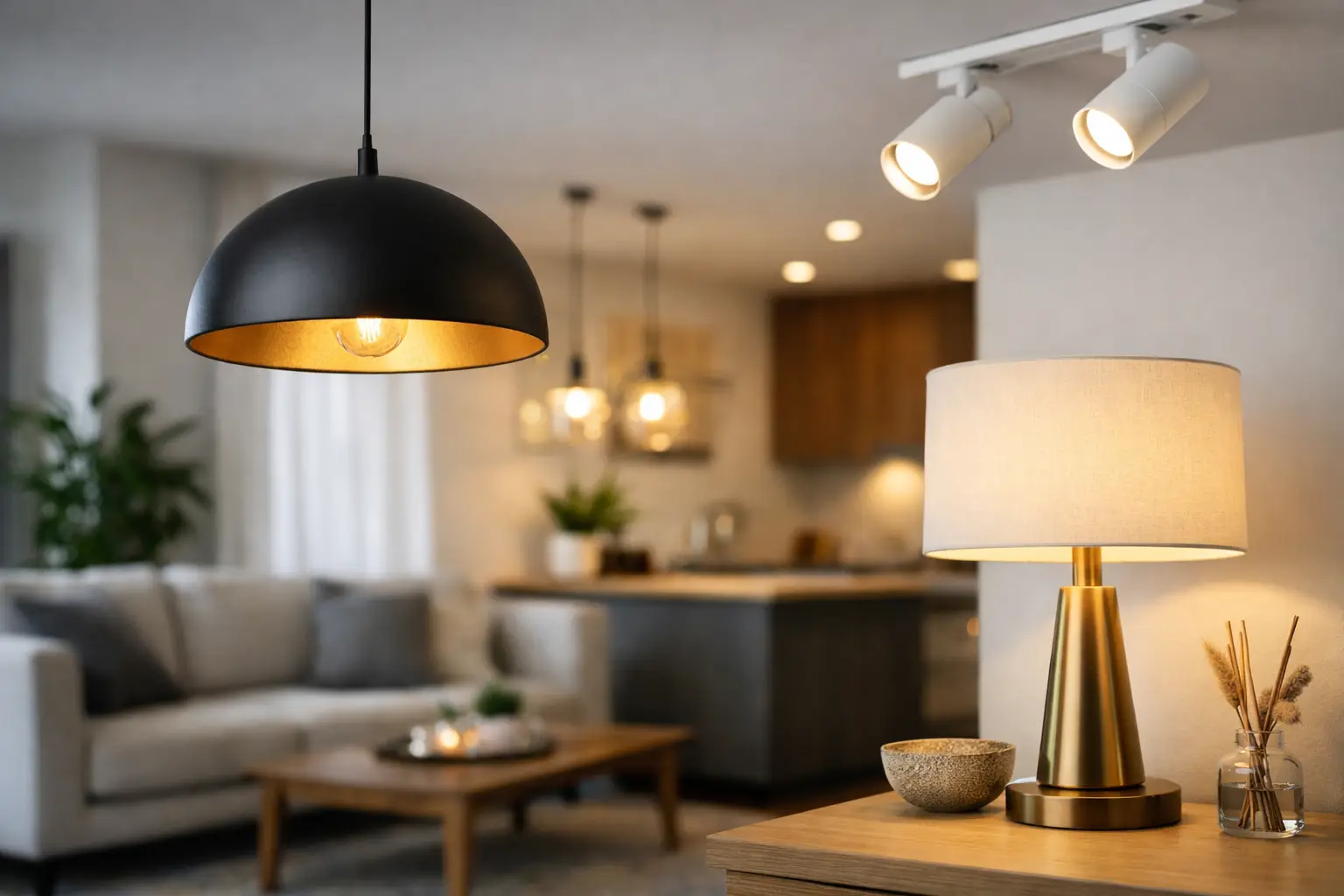
A weak light above the work surface, a dark corner in the living room or a night lamp that is too dazzling can turn a pleasant home into a less comfortable one to live in. Home lighting solutions You don't have to start by replacing an expensive light fixture or hiring an electrician. Sometimes the right table lamp, an LED strip with a sensor or one smart bulb changes the use of the room already that day.
For those who shop online, the large selection can also work against them: thousands of lamps look almost identical, the prices are low, and the promises on the packaging sound impressive. The way to find a good deal is not to look for the cheapest lamp, but to adjust the type of lighting to the need, to check a short but significant specification, and to give weight toratings and orders Previous ones.
First choose a use, then a product
The common mistake is to buy according to a picture. Beautiful lighting in a picture can be too weak for reading, too white for a bedroom or simply not suitable for the outlet and voltage at home. Before filtering products, you should decide what the lighting is actually supposed to do.
General lighting is designed to illuminate an entire room. Here you are usually looking for a ceiling light, a ceiling-mounted light fixture or a strong standing lamp. Task lighting is designed for a specific action: reading, cooking, working in front of a computer, doing makeup or small repairs. It should be more focused, and usually it should be close to the work surface. Ambient lighting does not replace the main light, but it adds depth and comfort through LED strips, side lamps or hidden lighting behind a screen and TV.
In a small house, one product can play two roles. For example, an adjustable floor lamp next to a sofa can provide light for reading and also add soft light in the evening. In the kitchen, an LED strip under the cabinet provides excellent task lighting without burdening the ceiling. The choice depends on the room and the routine of use, not only on the design style.
Home lighting solutions by region
Living room: layers of light instead of one strong source
A living room lit only by a central ceiling fixture often looks flat, and in the evening the light may be too strong. Combining a central source with a table lamp or a floor lamp allows you to easily switch between entertaining, watching TV and reading. If there is a screen in the living room, a weak LED strip behind it can reduce the sharp contrast between the screen and the dark wall.
It is better to choose warm light for the living room, usually around 2700 to 3000 Kelvin. It is a more pleasant yellowish light than cold white light. Smart bulb With a shade change is suitable for those who want flexibility, but if the goal is just calm lighting in the evening, a simple warm bulb will be cheaper and will do a good job.
Kitchen: light that lets you see what you're doing
A dark cutting surface is not a design issue but a usage issue. Lighting under the upper cabinets is one of the worthwhile upgrades to the kitchen, especially in rented apartments where you don't want to change infrastructure. Look for an LED strip or a thin light fixture with installation using strong glue, a magnet or screws, depending on the surface and weight.
Here neutral to white light, about 4000 Kelvin, often works better. It displays colors more clearly and makes food preparation easier. It is important to check if the product comes with a suitable power supply, a cable of useful length and an accessible switch. A cheap product that requires an extra adapter or a cable that is too short may be less profitable than its initial price.
Bedroom: less glare, more control
In the bedroom, the lighting should be suitable for both the morning and the hours before bed. Side lamps with warm light, dimming or an adjustable head help to read without lighting up the whole room. For those who get up at night, a night lamp with a motion sensor is a small and useful solution for the hallway, children's room or next to the bed.
Pay attention to the location of the sensor. If he is directly facing the bed, any movement can turn on the light. In some products it is possible to adjust sensitivity and shutdown time, and in others not. If there is no such option, it is better to choose an extremely weak light and not a product that only declares high brightness.
Work area: brightness and quality of light are more important than the color of the lamp
For working in front of documents or a computer, a table lamp with a flexible arm and angle direction gives a better result than a decorative lamp. You should place it on the opposite side next to the writer, to reduce the shadow on the page. Those who work long hours may prefer adjustable lighting in intensity and color, but there is no need to pay for dozens of color modes if you only use two of them.
In small products it is important to check the brightness figure in lumens, and not be satisfied with the power in watts. Watt mainly describes power consumption, while lumen indicates how much light the lamp produces. If the figure does not appear at all, the pictures alone are not enough to estimate the lighting intensity.
Closets, stairs and entrance: a motion sensor saves mess
Rechargeable lighting with a motion sensor is suitable for places that do not want or cannot connect to electricity: wardrobe, deep drawer, pantry, stairs, entrance or trunk. The advantage is quick installation, usually with the help of a magnet or a sticker. The downside is a battery that needs to be charged, and sometimes a sensor that responds too slowly or too quickly.
For daily use, check the battery capacity, the type of charging connection and the stated operating time. A model with a USB connection has a practical advantage, because it is easier to find a cable for it. Also check reviews with pictures: they can show if the lighting is uniform, how thin the lamp really is, and what the installation looks like after a few weeks.
What to check before adding to the cart
You don't need to read every line in the specification, but there are some details that separate a smart purchase from a product that remains in the drawer:
- Dimensions and installation: Measure the area in advance. A one-meter LED strip does not necessarily fit the length of the cabinet, and a large light fixture can look cluttered in a small room.
- Voltage, plug and power supply: Check compatibility with the local electricity and the type of plug. In normal bulbs it is also important to verify the screw type, such as E27 or E14.
- Brightness and light shade: Warm is suitable for relaxation, neutral is suitable for most tasks, and cold white is suitable for cases where sharp visibility is required. If possible, choose dimming for more flexibility.
- Ratings and orders: A high score is important, but so is the number of orders. A product with many orders and detailed reviews usually gives a more reliable picture than a new product with only a few ratings.
- Package contents: Check if remote control, battery, glue, power supply, remote control or installation accessories are included. A small addition that is missing can delay the use of the product.
When is it worth paying for smart lighting?
Smart lights, LED strips with an app and wireless switches can be very useful, but they are not the automatic choice for every room. They are especially suitable for those who want to turn on and off from the phone, set fixed hours, change intensity or create permanent evening lighting without getting up from the sofa.
The low price of a smart product is not always the final price. Sometimes an additional app, a stable wireless connection, or a compatible hub is required. If the goal is just to turn on a light at the entrance when you get home, a simple motion sensor may be more reliable and cheaper. If you want to combine several lamps in one scene or control them remotely, the smart features already justify the investment.
Compatibility is also important. If your home already has a smart home system, you should choose a product that works with it instead of creating another app and another remote. Read the compatibility description and reviews carefully, especially when it comes to a product that connects to permanent electricity.
Small mistakes that make the purchase more expensive
Buying an extremely cheap LED strip without checking the length, type of connection and installation location is a classic example of a deal that looks good only at first. The same goes for buying a bulb that is too strong for a small room, or a weak table lamp that is mainly intended for decoration. The right price is the price of a product you will use, not the lowest price in the search results.
You should also avoid blanket promises like "super bright" or "premium quality" when there is no data, customer photos or ratings to back them up. When filtering products, start by lighting type and price, then compare rating, number of orders and basic features. It's a faster way to find useful items without scrolling through dozens of almost identical options.
The best upgrade doesn't have to be big: tonight choose one corner that bothers you, measure it, and order a lighting solution that fits exactly how you use it. Right light in the right place is a small improvement that you feel every day.