
August 13, 2026
Review of electric cleaning brushes - what is worth buying?
Review of electric cleaning brushes for a smart buy: this is how power, heads, battery, impermeability and price are checked to choose a useful tool for cleaning the bathroom, kitchen and car in a smart way and on a low budget.
A stubborn scale stain on the shower door, black crevices between tiles or grease that has dried around the stove can turn a ten-minute cleaning into a frustrating task. Electric cleaning brushes review Helps to separate between a cheap gadget that stays in a drawer and a tool that really saves friction, time and effort. The price is important, but it is only part of the deal: the brush heads, the speed, the battery and the waterproofness will determine if the brush will fit your home.
An electric cleaning brush is not a miracle machine. It won't replace scale remover or remove deep mold without proper treatment, but it can do the dirty work faster and with less pressure on the hands. This is exactly the type of product you should buy according to real use, and not just according to a shiny image or a high discount.
Review of electric cleaning brushes according to real use
The common mistake is to choose the strongest brush on the paper. In practice, a suitable brush is the one that reaches the corners where you really clean, lasts long enough for an entire cleaning unit and doesn't weigh you down after two minutes. In small apartments, for example, a compact model with a round head may be more useful than a long, bulky rod. In a home with two showers, however, a telescopic pole can justify the extra price.
The outstanding advantage of an electric brush is the continuous rotation movement. Instead of exerting force with the wrist, place the head on the surface and move it slowly. This is especially useful on tiles, bathtubs, sinks, wheel rims and kitchen surfaces. And still, you should let the detergent work for a few minutes before brushing. On old dirt, the time of the material is just as important as the revolutions per minute.
for the bath and shower
A bathroom usually needs two things: easy access and water resistance. A flat, wide head is suitable for tiled walls, the bath and the floor, while a smaller head fits around faucets, in shower rails and in corners. If the house has a lot of glass coverings, choose bristles that are not too hard. Stiff bristles can leave marks on clear plastic, acrylic or delicate coatings.
An extension pole is a clear advantage for the floor and high walls. It reduces squatting and bending, but also adds weight and sometimes makes the head less stable. For a small shower, you can manage with a short handle. For a large bathroom or for users who prefer not to bend over, an adjustable rod is a detail worth looking for.
For the kitchen and stubborn fat
In the kitchen you don't always need a particularly powerful engine. Sometimes the right head is more important: a small, dense head will handle better around stoves, handles, ceramic grooves and sink corners. Note that the brush is intended for use with normal household cleaners, and that you do not use an aggressive head on shiny stainless steel, coated surfaces or glass.
Pots, pans and dishes should be used with discretion. An electric brush can help on the outer bottom of a pot or on a baking sheet, but hard bristles can damage the non-stick coating. In that case, a soft head or fine sponge would be a safer choice. The low price of the device does not justify replacing an expensive cookware.
For car, balcony and outdoor equipment
For a car, the advantage is mainly in wheels, rims, rubber mats and rough plastic. For the car paint itself, a gentler solution is usually better, with a very soft brush and lots of water. Small sand caught in the bristles can scratch, so it is important to wash your head before each use.
On the balcony and outside, you should check if the handle is long enough and if the battery can be removed or charged comfortably. Rough surfaces require more force, and a weak brush may stop with every application of pressure. There is also a limit here: for particularly heavy dirt on an outdoor floor, a hard broom or a water pressure device can be more effective.
What to check before buying an electric cleaning brush
In catalogs of discounted products it is easy to be drawn to a large number of heads or an impressive discount percentage. These are helpful figures, but they are not the full picture. A product with four useful heads is better than a set with eight almost identical heads, and a good deal is a deal on a product that you will use more than once.
Check the battery type and charging method. USB charging is convenient for most users, especially if there are already suitable chargers and cables at home. A built-in rechargeable battery simplifies use, but if it weakens over time it cannot always be replaced. Models with removable batteries give flexibility, but sometimes require separate purchase of batteries or charger.
Realistic runtime is more important than a general promise of a strong battery. If you plan to use the brush only for cleaning the sink and shower once a week, even a moderate working time will be enough. If it is intended for cleaning several bathrooms, a balcony and a car, look for a model that lasts a long time or charges quickly. Reviews of buyers can help understand whether the declared figure corresponds to actual use.
Waterproofing is a point that should not be skipped. A brush designed for the bathroom needs to handle water splashes, but that doesn't necessarily mean you can immerse its entire body in a bucket. Look for a clear description of water resistance, and pay particular attention to the charging area and connections. Even a durable product should dry well after use.
Before adding to cart, go through these five signs:
- A high buyer rating alongside a significant number of orders, and not a high score from a very small number of opinions.
- Buyer photos showing actual brush size and quality of connections.
- A clear breakdown of the included heads and whether replacement heads are available.
- The dimensions of the handle and the rod, especially if you have a small storage cabinet or need to reach the floor and high walls.
- A final price that remains worthwhile even after choosing a version with a battery, extension pole or additional heads.
How many heads do you really need?
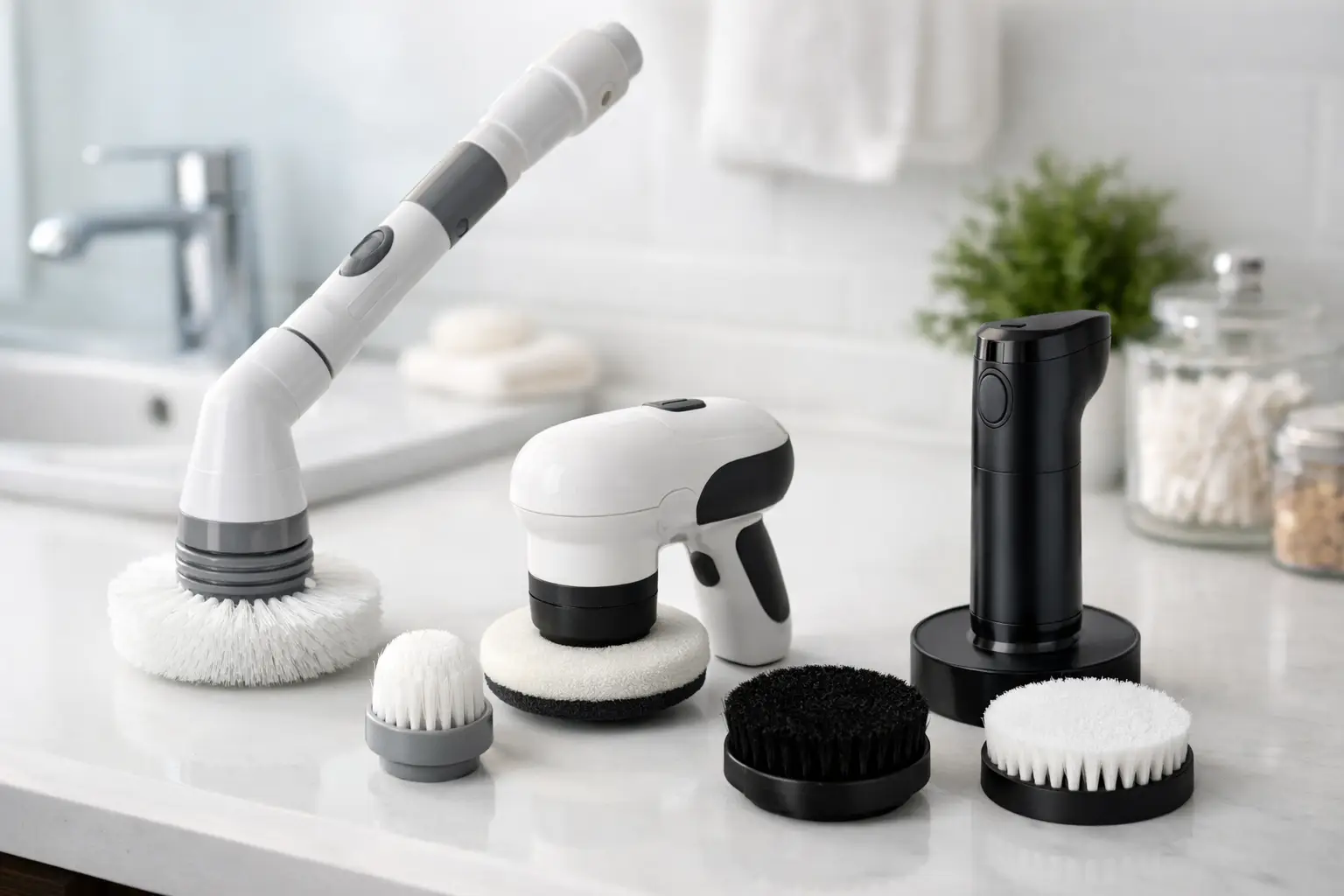
For most homes, a set with a large flat head, a small round head and a conical head for corners covers most tasks. A sponge or cloth head can be useful for delicate surfaces, but you don't have to pay more just because it's included. On the other hand, a conical head is a really useful item if there are a lot of grooves, rails or connection areas around faucets.
Head replacement should be simple but stable. If the connection is loose, the head may swing while working and make cleaning tiring. If it's too tight, you'll find yourself avoiding switching and losing the benefit of a diverse set of heads. In the photos and reviews, look for a reference to the connection, not just the result on new, clean tiles.
When is a cheap deal a good deal?
Electric cleaning brushes are sold in a wide price range, and sometimes the same design appears in several versions. The difference can be due to the number of heads, the length of the rod, the battery capacity or the quality of the packaging. There's no need to pay for the highest spec if your use is basic, but even an extremely cheap model that isn't sealed or comes with only one head may not provide real value.
The smart approach is to start with one task. If you want to make cleaning the shower easier, focus on bath heads, water resistance and a suitable rod. If the goal is rims and a porch floor, check for strength, a grip handle, and durable bristles. This way it is easier to compare models according to what is important to you, instead of chasing after a long list of specifications.
The assumption should also be checked in context. A high discount percentage can be a good opportunity, especially when there are ratings and orders that strengthen the credibility. But if the delivery time, the cost of the accessories or the plug fit are not clear, you should stop and read the product details. A quick purchase is only an advantage when it is based on a few short and correct tests.
Finally, take care of the brush so that it continues to be a good deal: wash your head after each use, remove any detergent residue, let it dry and store the device in a dry place. A brush chosen according to the surfaces in your home, and not just according to the price tag, can make weekly cleaning shorter and more convenient from the very first use.